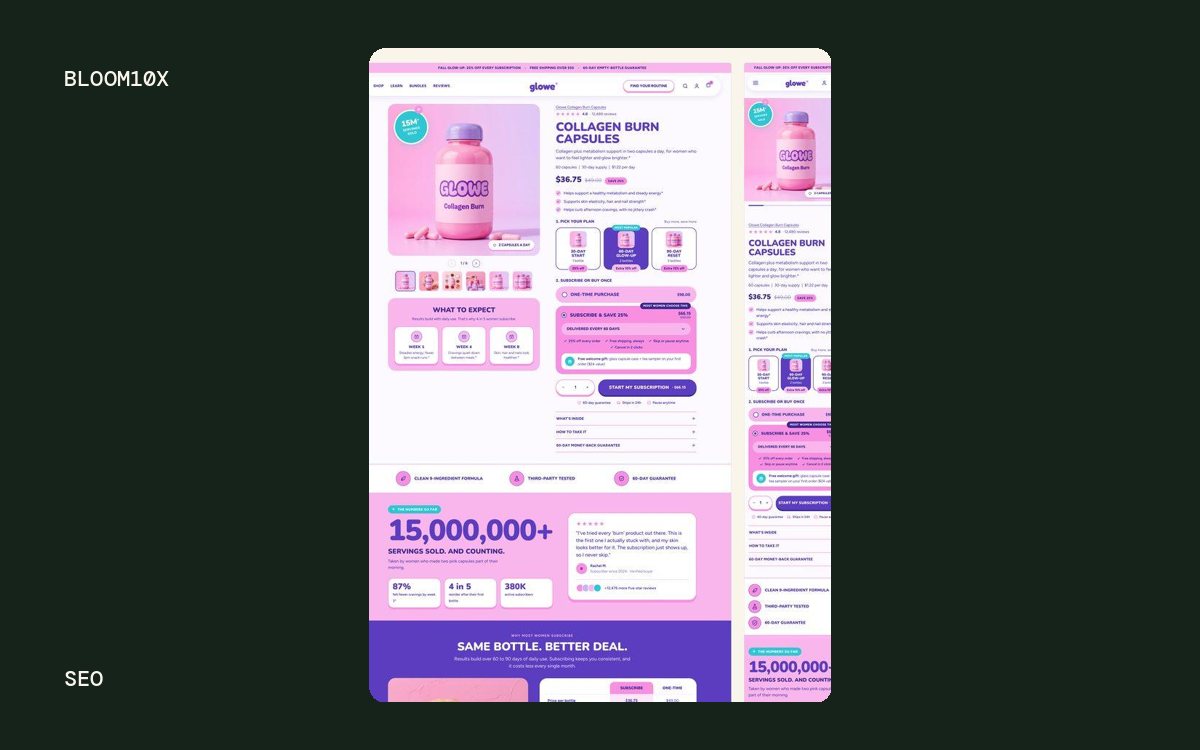
- A product description that ranks answers the buyer's search in their own words, is unique to your store, and leads with the main benefit.
- Structure it for scanning: short paragraphs, bullet points for specs, a clear call to action.
- Back it with technical basics: a written title tag and meta description, descriptive image alt text, Product structured data, and fast mobile pages.
A product description helps SEO when it answers the search a buyer types, in the words they use, with copy no other store has. It also has to sell, because a page that ranks and does not convert wastes the traffic. This article covers what makes a description search-friendly, how to write one, and how to keep improving it.
What makes a product description good for SEO
A search-friendly description is original, specific and written for the buyer's intent. Search engines read the copy to understand what the product is and who it is for, and they favour pages that match the query.
Matching intent means using the buyer's language. Instead of calling a product "durable", say what it survives: "waterproof and scratch-resistant, built for daily use outdoors." Specific copy ranks for the longer searches people type when they are close to buying, and it answers the questions that would otherwise send them back to the results page.
Copy matters most when it is unique. Manufacturer descriptions copied across dozens of stores give search engines no reason to rank yours.
The foundations
Start with keyword research
Find the terms people use for the product, including the longer, specific phrases. "Women's waterproof hiking boots wide fit" tells you far more about the buyer than "hiking boots". Use a keyword tool and your own site search and customer questions to build the list.
Know who you are writing for
A buyer who knows the category searches for specs; a first-time buyer searches for the problem. Write for the person most likely to buy, and cover the other in a short section or the FAQ.
Look at what ranks now
Read the top results for your main term. Note the benefits they lead with, the questions they answer and how they are structured, then write something more useful.
Structure for scanning
- Short paragraphs.
- Bullet points for specs, sizes and materials.
- Bold for the details people look for first.
- One clear call to action.
Writing copy that ranks and sells
Lead with the main benefit in the first sentence: "This chair supports your lower back through a full working day." Then explain how, with the features that prove it.
Tell a short story where it helps. Describe the moment the product is used and what is better because of it. Keep the brand voice consistent across every product page, whether it is playful, technical or premium.
Use keywords where they read naturally. If a sentence sounds written for a search engine, rewrite it for a person.
Technical SEO for product pages
- Title tag and meta description: write them for each product. The title names the product and its main attribute; the description gives the reason to click.
- Headers: use them to organise longer descriptions so both readers and search engines can follow the page.
- Images: descriptive file names and alt text, for example "organic-cotton-tshirt-front-view", which helps accessibility and image search.
- Structured data: Product markup with price, availability and reviews can earn rich results in Google.
- Mobile and speed: most shoppers browse on a phone, so fast, responsive pages matter for rankings and for sales.
- Clean URLs and HTTPS: short, readable product URLs and a secure site.
Improving descriptions over time
Check how each page performs in your analytics: traffic from search, time on page, add-to-cart rate and conversion rate. Pages with traffic and low conversion need better copy; pages with good copy and no traffic need better targeting.
Test changes one at a time, such as length, tone or a bullet list against a paragraph, and keep the version that sells more. Read customer reviews and support questions for the words buyers use and the doubts they have, and answer those doubts in the description.
Review descriptions when products change, when new competitors appear, or every few months for your top sellers.
Advanced techniques
| Technique | What it is | Why it helps |
|---|---|---|
| Long-tail keywords | Specific phrases a buyer types near purchase | Reaches searchers with clear intent |
| Customer reviews on the page | Ratings and quotes from buyers | Adds trust and fresh, unique text |
| Product FAQ | Answers to the questions buyers ask | Removes doubts and covers more searches |
| Structured data | Product, price, availability and review markup | Makes the listing richer in search results |
| A/B testing | Comparing two versions of the copy | Shows which version sells more |
Frequently asked questions
What makes a product description SEO-friendly? It is original, uses the words buyers search with, leads with the main benefit and is structured so people and search engines can scan it.
How often should I update product descriptions? Review your top sellers every few months and any product when it changes. Update based on what search and sales data show.
Do customer reviews help product page SEO? They add unique, regularly updated text and answer buyer questions, and review markup can show star ratings in search results.
Does this work for every ecommerce brand? The principles do. The words, the length and the tone depend on the product and the buyer.

Michael Bui founded and runs BLOOM10X, a growth agency for ecommerce brands on Shopify. About BLOOM10X